

1. The ARCUS Process
– How our technology
works
– How our technology
works
ARCUS technology is based on a pyrolysis process in which plastic waste undergoes thermochemical conversion under heat and in the absence of oxygen. This process produces ARCUS Liquid, product gas, and a small amount of non-hazardous solids. ARCUS Liquid can then be reused as a circular raw material in the petrochemical industry.
Technology
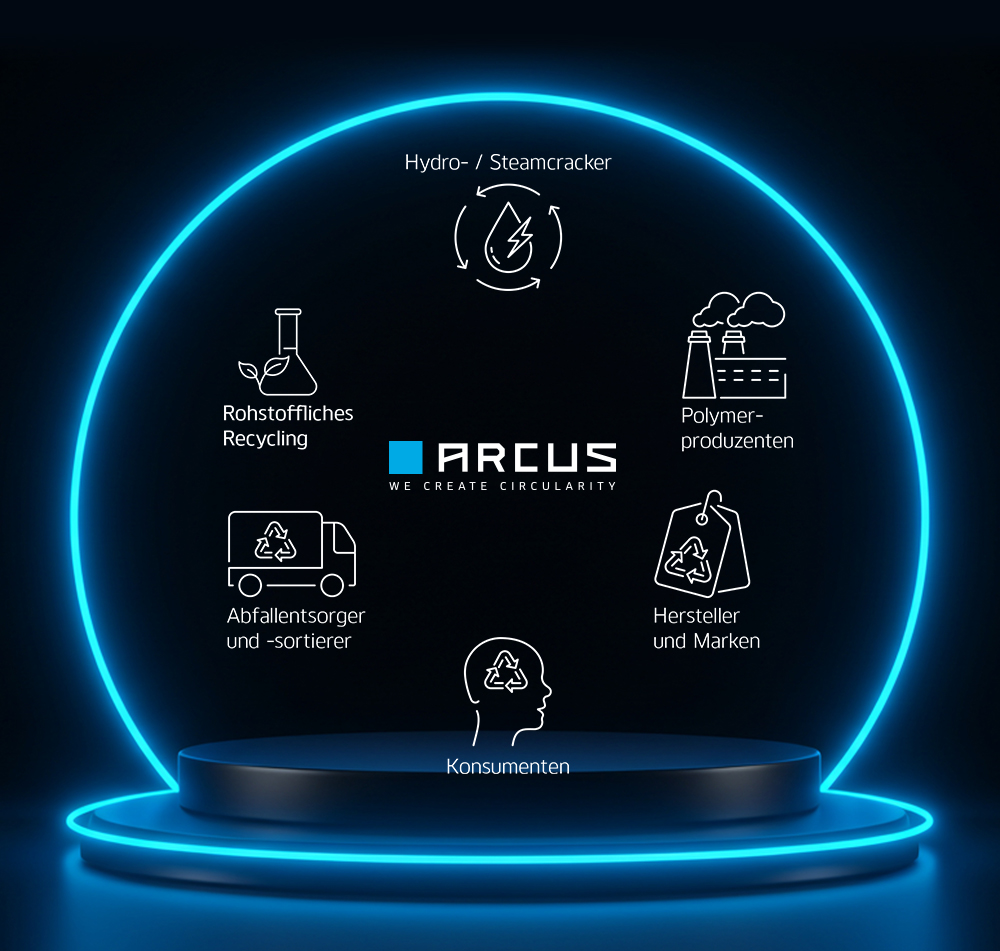
ARCUS offers a technology that enables the circular economy for plastics by technologically linking the waste management industry with the petrochemical industry. Waste that is currently used for energy or not used at all is transformed into valuable products for petrochemical production. These products serve as the basis for the manufacture of new plastics.
What sets the ARCUS process apart from other pyrolysis methods?
The ARCUS process is designed for processing complex and heterogeneous plastic blends and is characterized by a high degree of flexibility in terms of feedstock and robust process control. The plants are designed for continuous operation and are modularly scalable. At the same time, the process is geared toward a high pyrolysis oil yield and consistent product quality
♻ Feedstock Flexibility
Complex plastic blends
↻ Continuous operation
Designed for industrial applications
▦ Modular and scalable
Adaptable to different requirements
◉ Product Quality
Consistent quality of ARCUS Liquid

What is the yield of the ARCUS process?
The yield of the ARCUS process depends largely on the composition of the specific plastic waste. ARCUS’s experience and research findings show carbon recovery rates ranging from 50 to 80 percent, depending on the waste stream. For this reason, ARCUS analyzes material streams on a case-by-case basis and evaluates not only the yield but also the quality and usability of the resulting products.
Carbon recovery, depending on the specific waste stream